Genomics & Proteomics: LLM‑native infrastructure for precision medicine
Turning raw biological code into actionable intelligence for precision medicine, gene therapy design, and real-time variant interpretation.
Deep Cognition Labs is building large language models trained directly on genomic sequences, protein structures, and mutation landscapes. Our goal is to turn raw biological code—DNA, RNA, and amino acid chains—into actionable intelligence for precision medicine, gene therapy design, and real-time variant interpretation.
Genomic Intelligence Engine
1. Research Overview
Our Genomics & Proteomics program focuses on building domain-specialized LLMs that understand biological sequences as a language. By aligning nucleotide and amino acid tokens with structural, functional, and clinical labels, we create models that can reason about how mutations propagate through proteins, pathways, and phenotypes. This enables faster hypothesis generation, more targeted therapeutic design, and scalable interpretation of complex variant data.
2. LLM Platform for Biological Sequences
Genomic Sequence Models
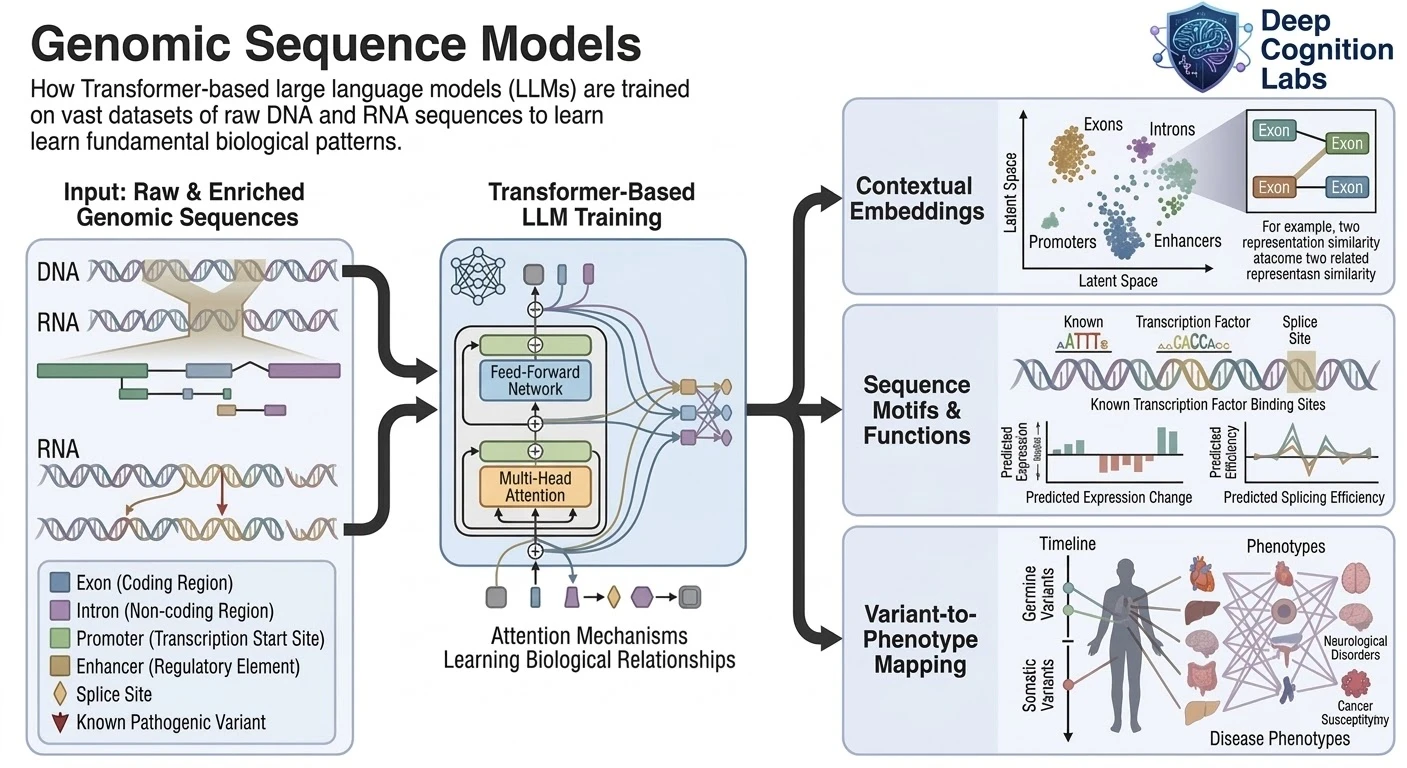
We train transformer-based LLMs on raw DNA and RNA sequences, enriched with annotations such as regulatory regions, splice sites, and known pathogenic variants. These models learn:
- Contextual embeddings for exons, introns, promoters, and enhancers
- Sequence motifs associated with expression changes and splicing disruptions
- Patterns linking germline and somatic variants to disease phenotypes
Proteomic & Structure-Aware Models
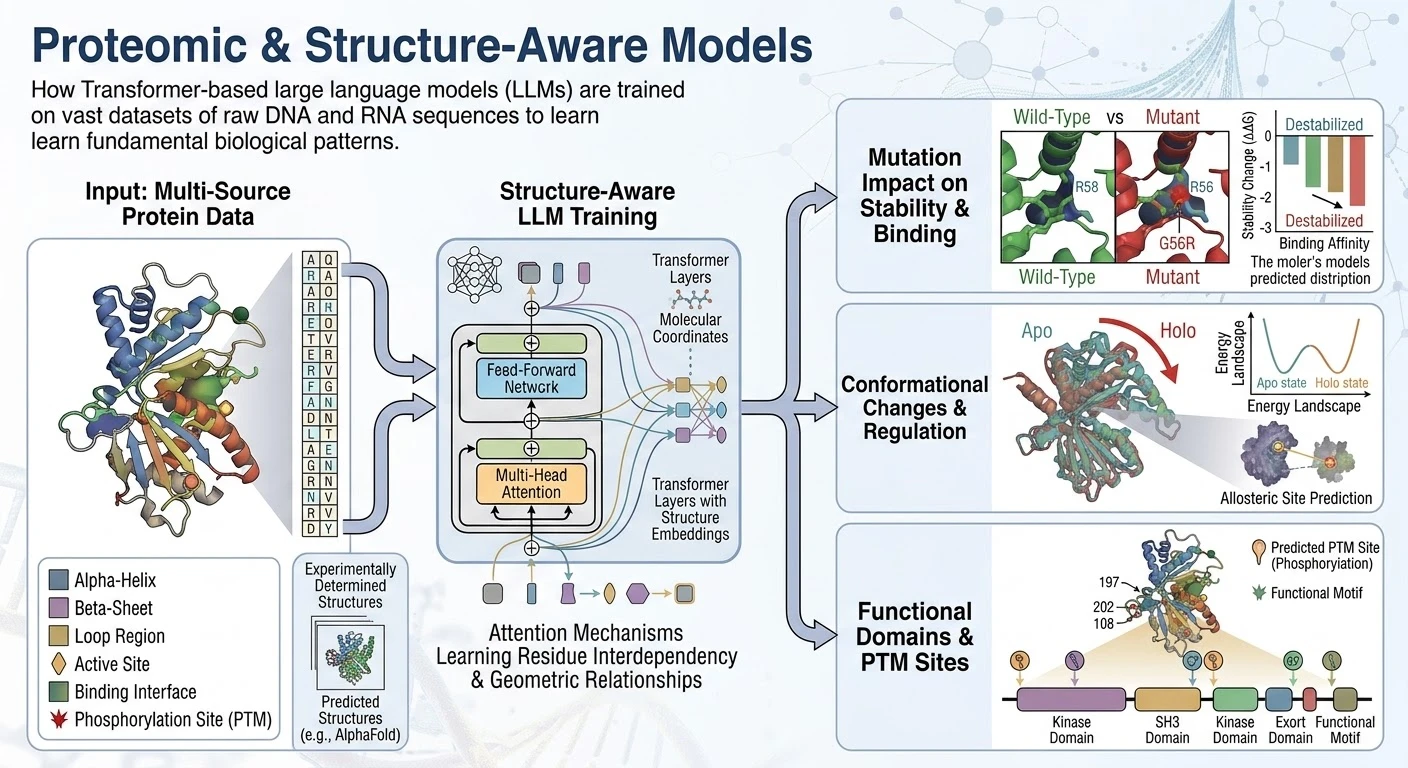
For proteins, we integrate amino acid sequences with predicted and experimentally determined structures. Structure-aware LLMs capture:
- Residue-level impact of mutations on stability and binding interfaces
- Conformational changes relevant to druggability and allosteric regulation
- Functional domains and post-translational modification sites
3. Applications in Precision Medicine & Gene Therapy
Clinical Variant Interpretation
Our models assist clinicians and molecular tumor boards by providing structured, explainable assessments of variants of unknown significance (VUS). The system can:
- Rank variants by predicted functional impact and therapeutic relevance
- Summarize supporting evidence from literature, databases, and internal cohorts
- Generate concise, clinician-ready reports with rationale and confidence scores
Gene Therapy & Protein Engineering
For gene and protein therapeutics, we use generative LLMs to explore sequence space under safety and efficacy constraints. This enables:
- Design of optimized coding sequences for expression and stability
- In silico screening of candidate edits for off-target and on-target effects
- Iterative refinement of therapeutic constructs guided by model feedback loops
4. Data, Training Pipeline, and Safety Layers
Multimodal Biological Data Stack
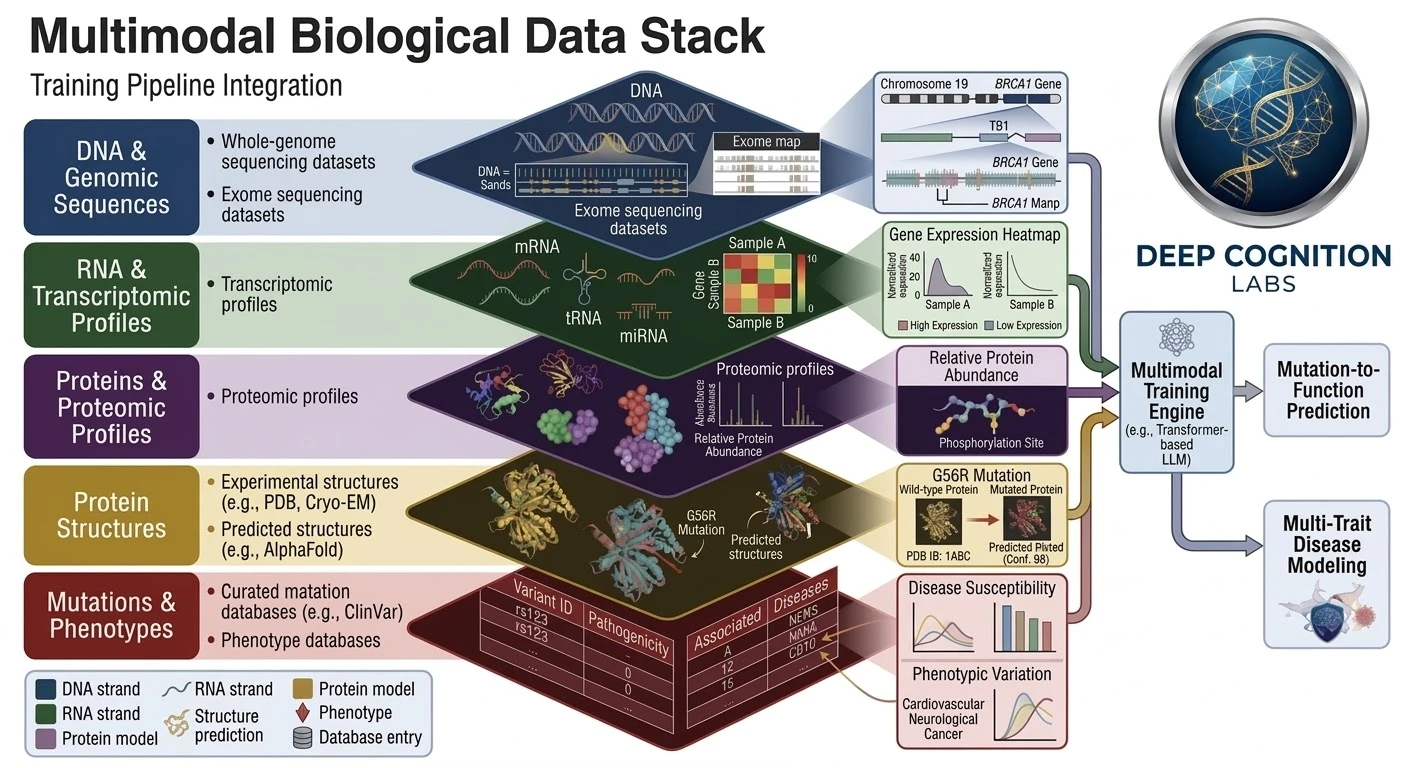
Our training pipeline integrates:
- Whole-genome and exome sequencing datasets
- Transcriptomic and proteomic profiles
- Protein structures (experimental and predicted)
- Curated mutation and phenotype databases
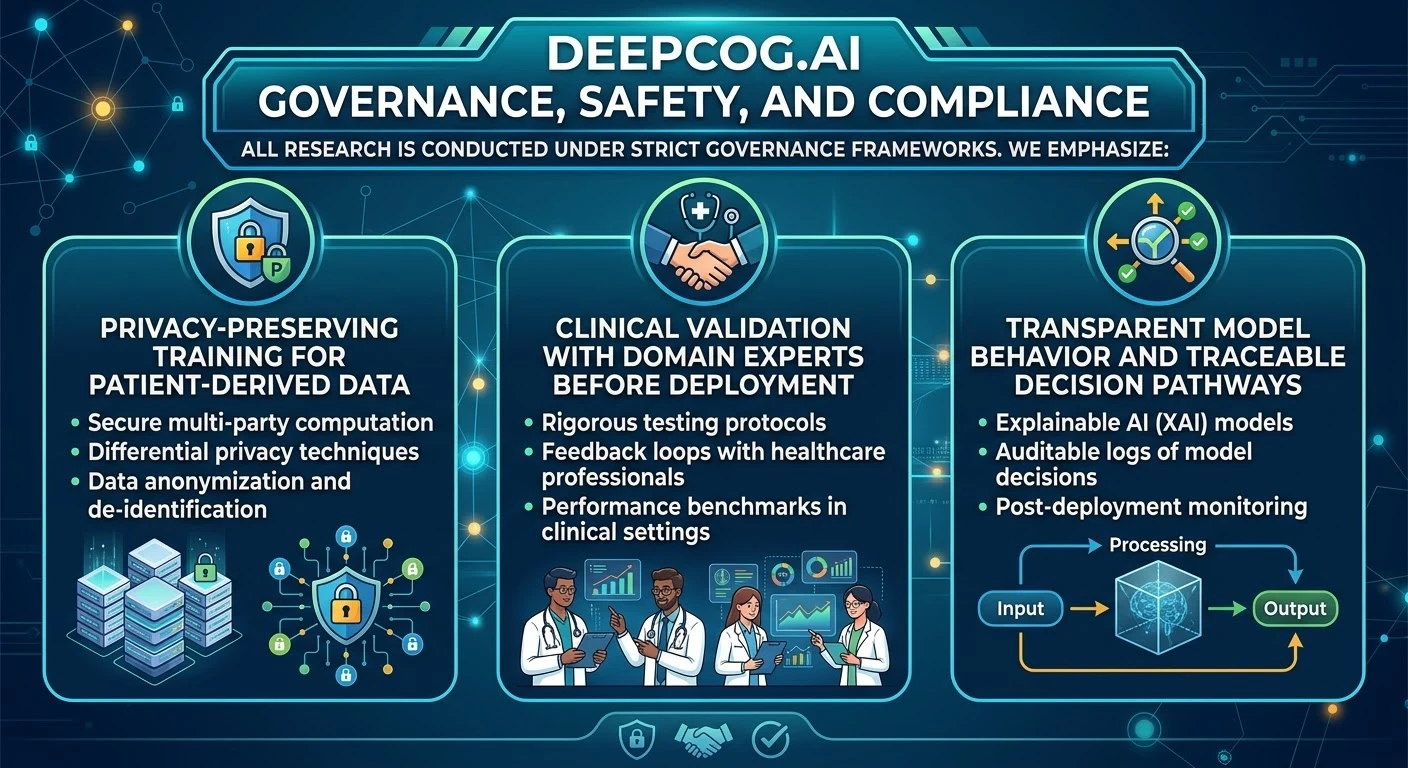
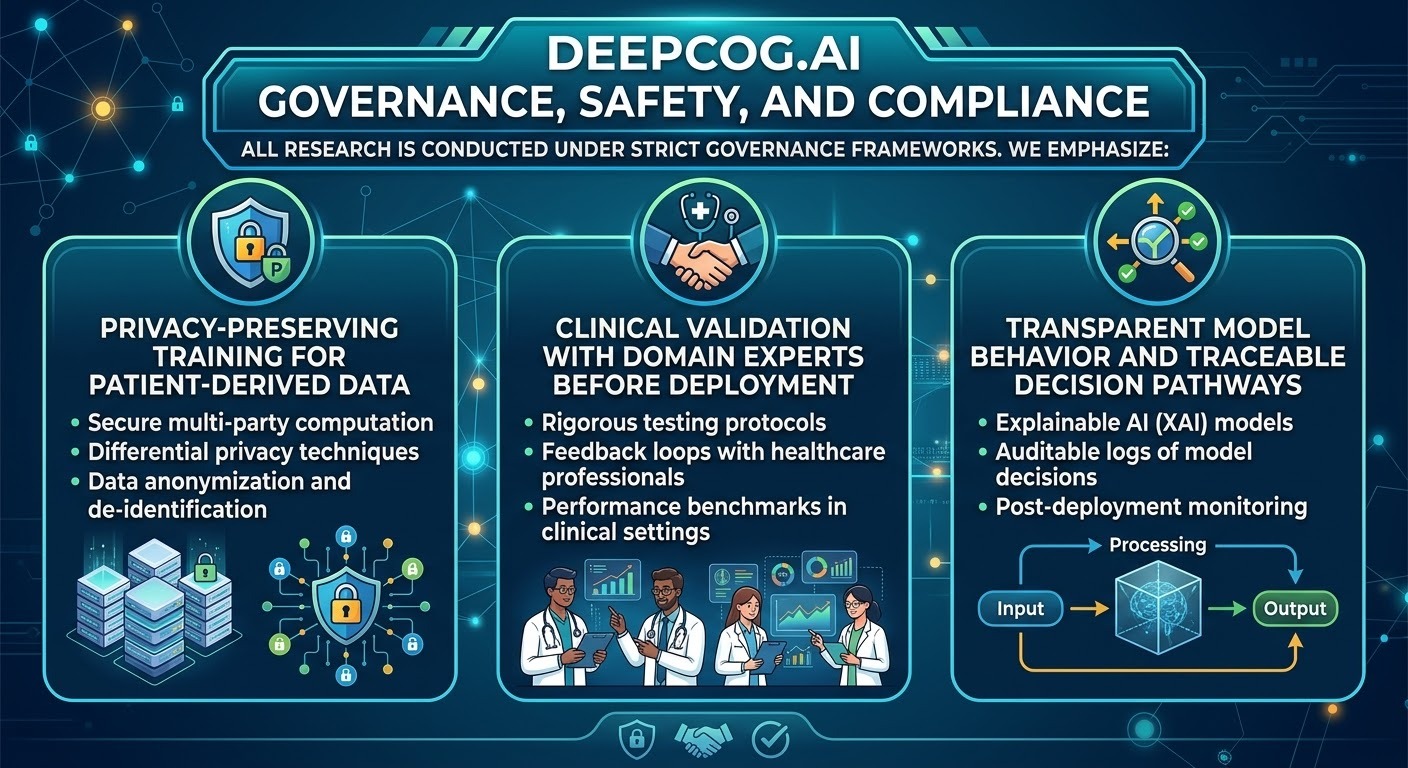
Governance, Safety, and Compliance
All research is conducted under strict governance frameworks. We emphasize:
- Privacy-preserving training for patient-derived data
- Clinical validation with domain experts before deployment
- Transparent model behavior and traceable decision pathways
5. Collaboration Tracks
Deep Cognition Labs partners with hospitals, biopharma, and research institutes to co-develop LLM-powered tools for genomics and proteomics. We offer:
- Joint research programs on disease-specific variant modeling
- Custom model training on institution-specific datasets
- Integration of our engines into existing bioinformatics workflows
Building models for this frontier?
We'd love to hear from you — whether you're training genomic sequence LLMs, building structure-aware proteomic models, or designing AI-guided gene therapy pipelines. We're happy to go deeper on the modeling approach behind this work.