What if AI could read the chemical software layered on top of the genome?
Disease risk, cancer detection, and therapy design would all get a lot more precise.
Epigenomics and epitranscriptomics represent the next frontier in genomic medicine, shifting our focus from the static blueprint of the DNA sequence to the dynamic, responsive software that controls it.
While traditional genetics maps the letters of our genetic code, epigenomics and epitranscriptomics analyze the biochemical "tags" applied to DNA and RNA. These modifications — such as methylation — profoundly alter gene expression and cellular behavior without changing a single underlying nucleotide.
Historically, mapping these intricate molecular layers generated datasets too vast and complex for human analysis. Today, Artificial Intelligence (AI) and Machine Learning (ML) are unlocking these codes.
By parsing billions of molecular data points, AI models are predicting how environmental factors influence disease susceptibility, discovering ultra-sensitive early-stage cancer biomarkers, and accelerating the development of highly targeted epigenetic therapies.
1. The Molecular Landscape: DNA vs. RNA Modifications
To understand the power of AI in this space, it is essential to distinguish between the two primary systems of molecular marking:
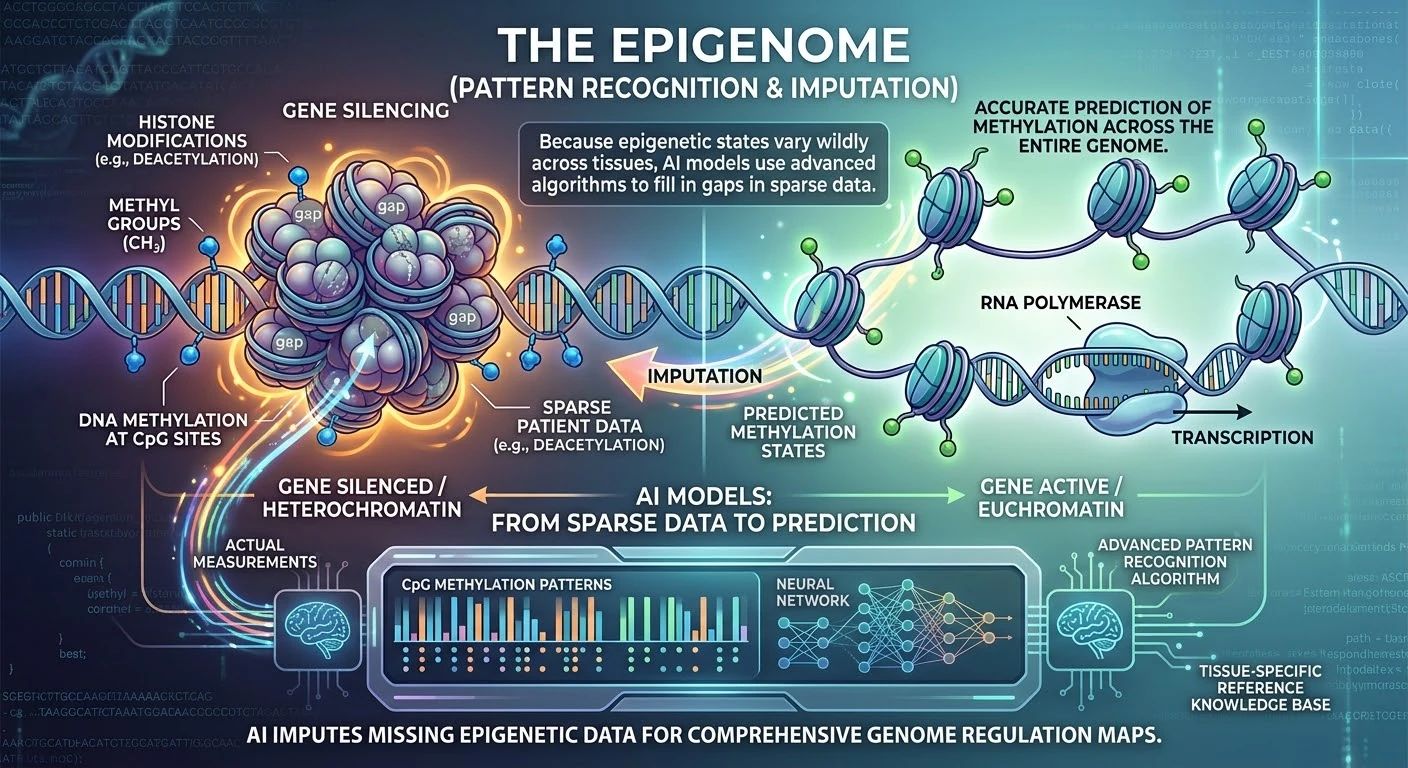
The Epigenome (DNA Modifications)
This system primarily involves the addition of methyl groups to DNA bases (often cytosine followed by guanine, known as CpG sites) and modifications to histone proteins around which DNA is wound. AI models analyze these patterns to determine whether a gene is tightly packed and "silenced" or open and "active."
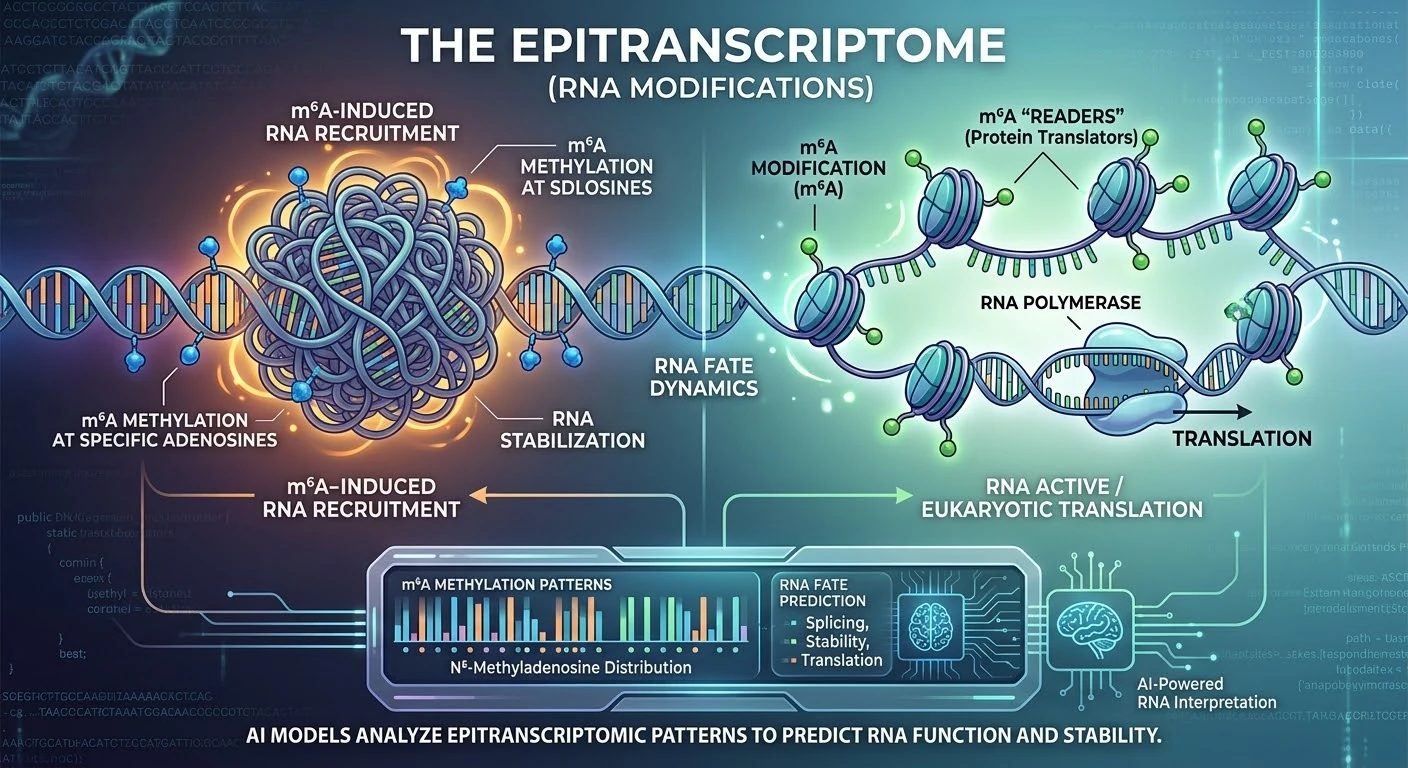
The Epitranscriptome (RNA Modifications)
This layer involves chemical alterations directly on cellular RNA molecules. The most prevalent modification, N6-methyladenosine (m⁶A), influences how RNA is spliced, stabilized, and translated into proteins. Epitranscriptomics adds an immediate, agile layer of cellular control, acting as a real-time dial for protein production.
AI algorithms excel at detecting these modifications simultaneously, providing a holistic view of a cell's functional state at any given moment.
2. How AI Decodes the Epigenetic and Epitranscriptomic Language
Traditional sequencing technologies often erase chemical modifications during the data-amplification process. Modern techniques like Nanopore sequencing and PacBio Single-Molecule Real-Time (SMRT) sequencing preserve these tags by measuring electrical current disruptions or kinetic variations as molecules pass through a pore or enzyme.
AI is the vital engine that interprets this raw, noisy data:
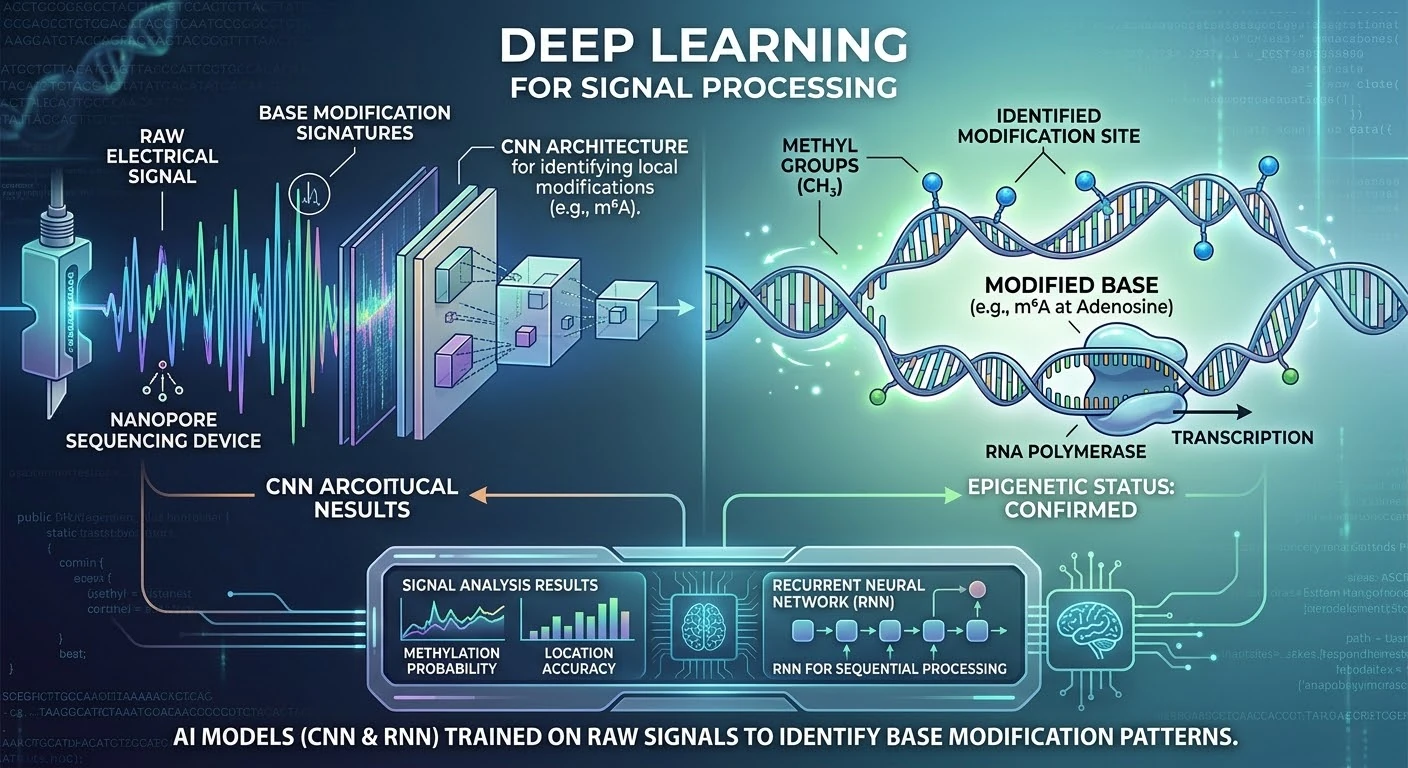
Deep Learning for Signal Processing
Convolutional Neural Networks (CNNs) and Recurrent Neural Networks (RNNs) are trained on raw electrical signals from sequencing devices to identify the exact chemical nature and location of base modifications.
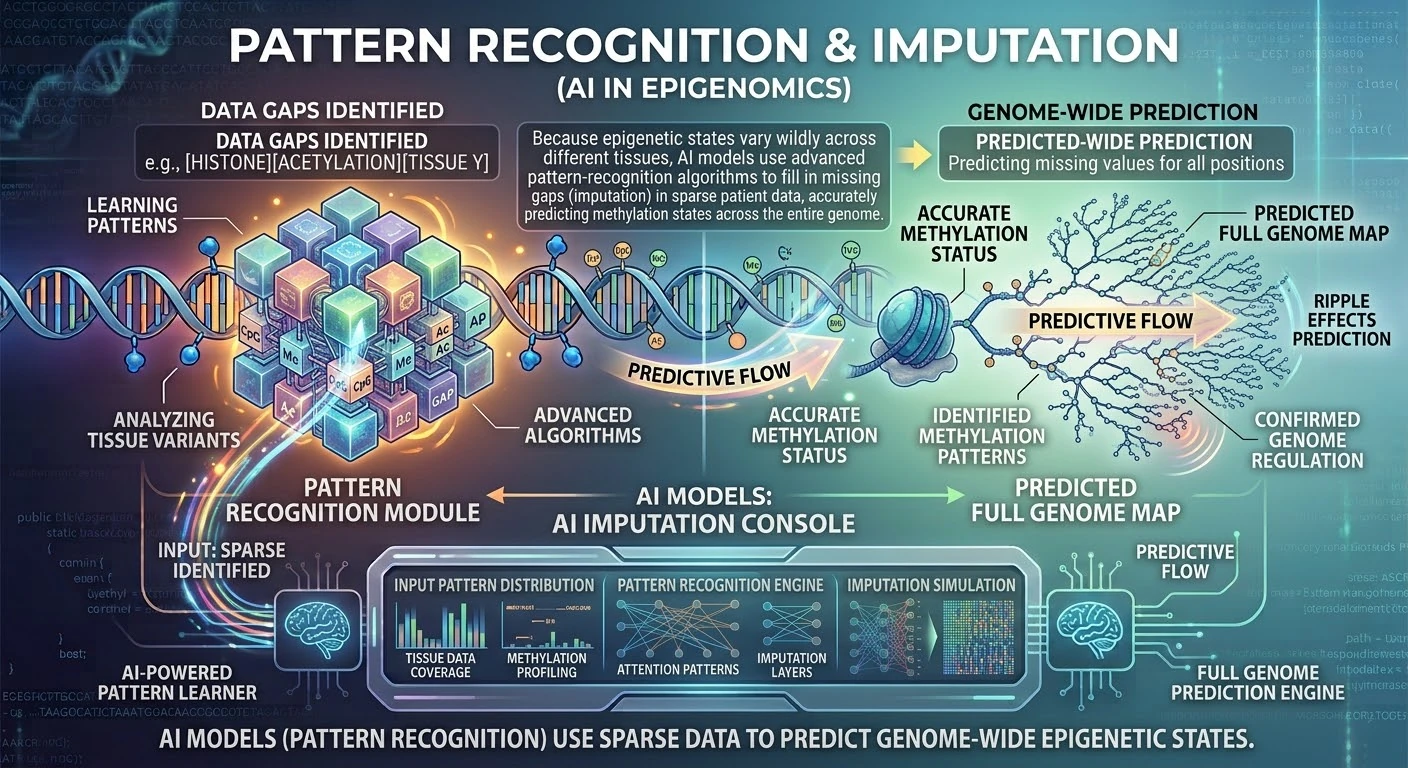
Pattern Recognition & Imputation
Because epigenetic states vary wildly across different tissues, AI models use advanced pattern-recognition algorithms to fill in missing gaps (imputation) in sparse patient data, accurately predicting methylation states across the entire genome.
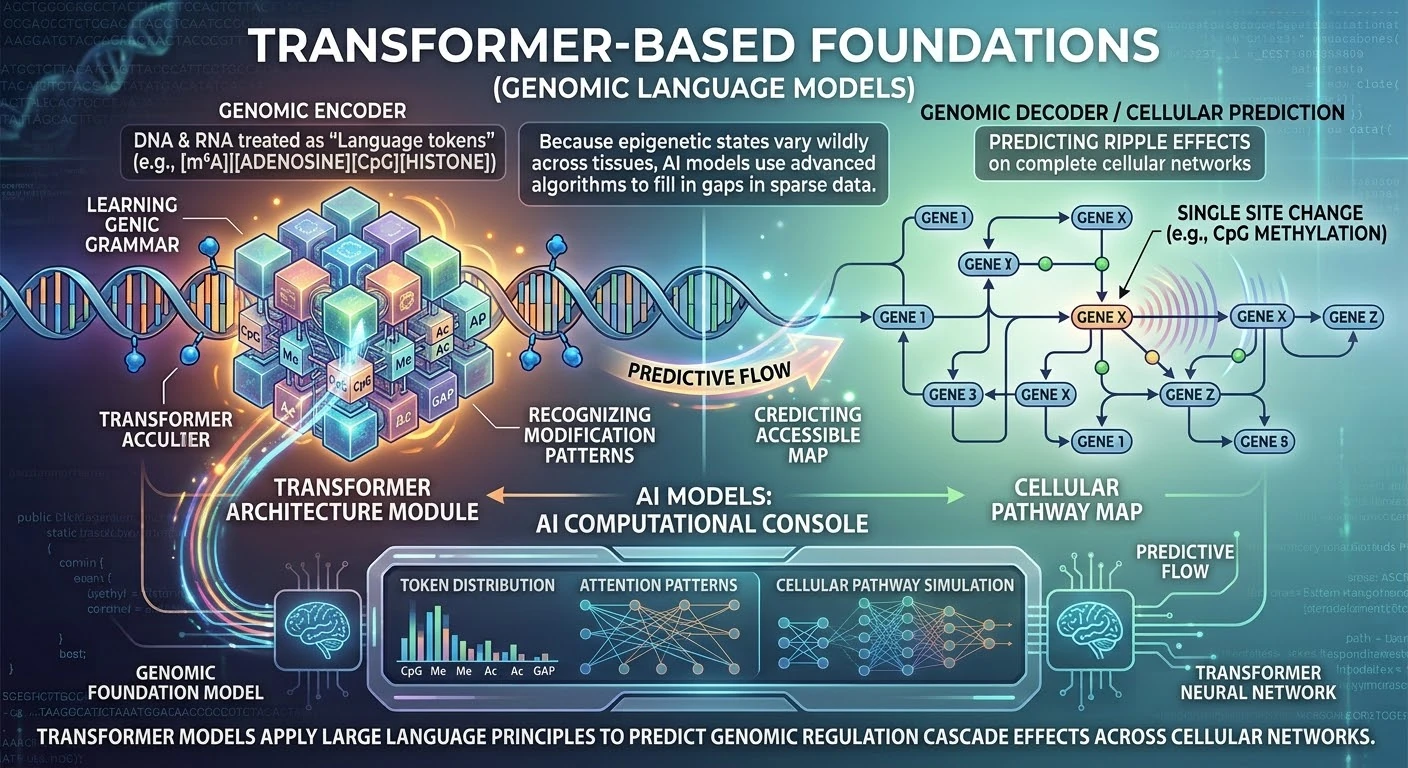
Transformer-Based Foundations
Large genomic language models apply transformer architectures — similar to those powering modern natural language processing — to treat DNA and RNA as a language. These models learn the "grammar" of gene regulation, predicting how a change in a single modification site will ripple across an entire cellular pathway.
3. Core Applications: Transforming Healthcare and Therapeutics
The synergy between AI and these molecular disciplines is driving breakthroughs across three major pillars of medicine:
Environmental Impacts & Disease Susceptibility
Our genetic code is mostly fixed, but our epigenome is highly sensitive to the outside world. Diet, stress, toxins, and aging leave distinct biochemical scars on our DNA.
- Biological Age Clocks: AI algorithms analyze specific DNA methylation patterns to calculate a patient's "epigenetic age," which can differ significantly from their chronological age.
- Risk Forecasting: By correlating environmental exposure data with epigenetic variations, AI models can predict an individual's long-term susceptibility to chronic illnesses, such as cardiovascular diseases, metabolic syndromes, and neurodegenerative disorders like Alzheimer's, years before clinical symptoms manifest.
Early-Stage Cancer Biomarkers
Cancer cells exhibit massive, chaotic shifts in their methylation landscapes long before physical tumors are visible on scans.
- Liquid Biopsies: When cancer cells die, they shed tiny fragments of DNA into the bloodstream (cell-free DNA, or cfDNA). AI models are uniquely capable of scanning this circulating blood data to isolate specific hyper-methylation patterns.
- Multi-Cancer Early Detection (MCED): Advanced ML classifiers can not only detect the presence of early-stage cancer from a simple blood draw but can also accurately pinpoint the tissue of origin — distinguishing, for example, early-stage lung cancer from pancreatic cancer — by decoding the epigenetic signature of the shed DNA.
Targeted Epigenetic Therapies
Unlike genetic mutations, epigenetic alterations are entirely reversible. This makes them ideal targets for therapeutic intervention.
- Target Identification: AI accelerates drug discovery by identifying specific enzymes — like DNA methyltransferases or RNA methyltransferases — that are malfunctioning in a disease state.
- Precision Editing: AI guides the development of CRISPR-based epigenetic tools (CRISPRoff/CRISPRon). Instead of cutting the DNA, these systems use AI-designed guide RNAs to precisely drop a methyl tag onto a specific gene, silencing a disease-causing driver without permanently altering the patient's genome.
4. Overcoming Challenges and Looking Forward
While the potential is immense, the field faces significant computational hurdles. Epigenetic data is notoriously high-dimensional and variable, changing not only from person to person but from tissue to tissue, and even hour to hour within the same individual. Training AI models requires massive, diverse datasets to prevent algorithmic bias and ensure predictions hold true across different global populations. Furthermore, ensuring that deep learning models are "interpretable" — meaning scientists can understand why an AI flagged a specific RNA modification as dangerous — remains a critical area of active research.
As AI infrastructure scales, the integration of epigenomics and epitranscriptomics will transition medicine from a reactive discipline to a proactive, highly personalized science — giving us the ultimate tools to rewrite how genes respond to the world around us.
Building models for this frontier?
We'd love to hear from you — whether you're training on nanopore or SMRT signal data, building m⁶A or methylation-calling models, or designing AI-guided epigenetic editors. We're happy to go deeper on the modeling approach behind this work.